case study · containers · CI/CD
CI/CD for AWS container services
A push-to-deploy pipeline for a Dockerized Python application on ECS Fargate, with Terraform infrastructure and short-lived AWS credentials from GitHub OIDC.
problem
Deploy containers without stored AWS keys or manual server work
The project needed a repeatable path from a source commit to a running container. Infrastructure, image version and deployment state had to remain reviewable rather than being assembled manually in the AWS console.
architecture
Public load balancer, private application tasks
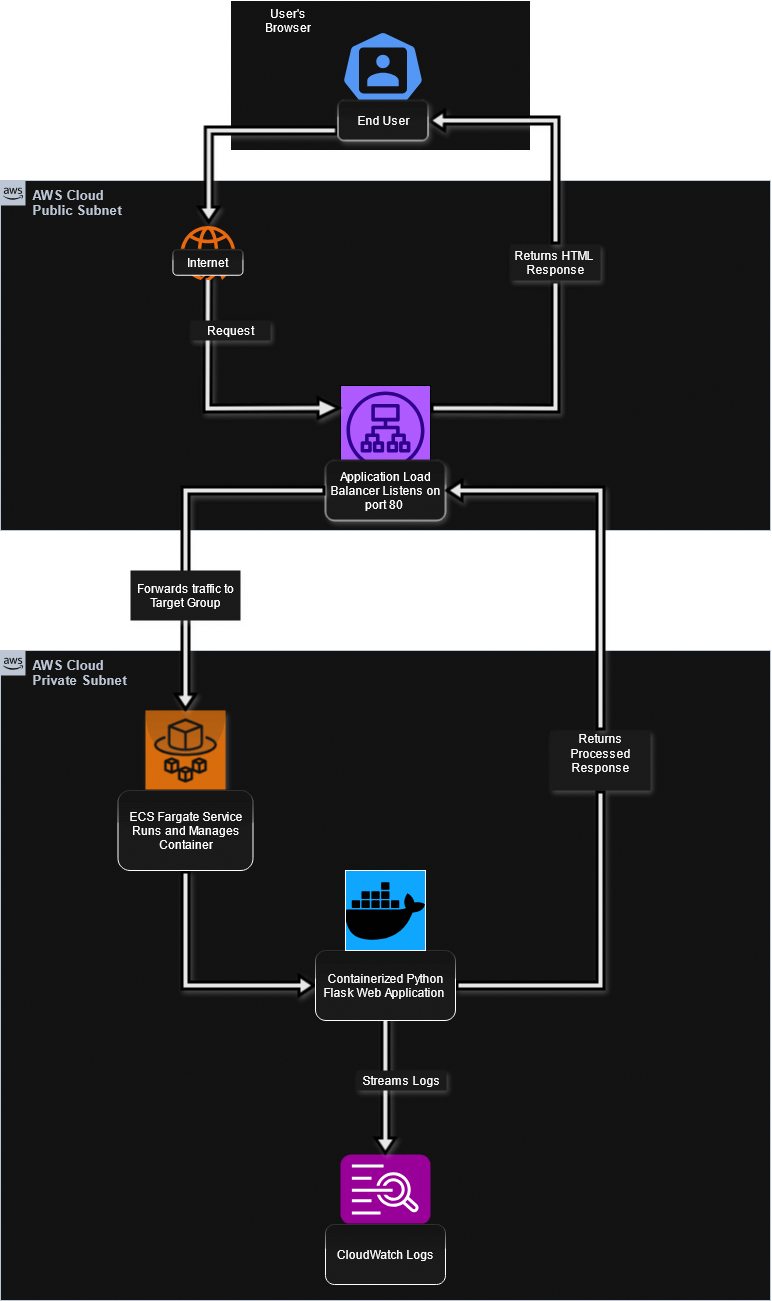
Security-group ingress ties the ECS service directly to the load balancer security group instead of allowing a broad network range. Terraform defines the VPC, subnets, ECR repository, load balancer, ECS cluster, task definition and service.
decisions and tradeoffs
Key design decisions
- OIDC instead of repository access keys
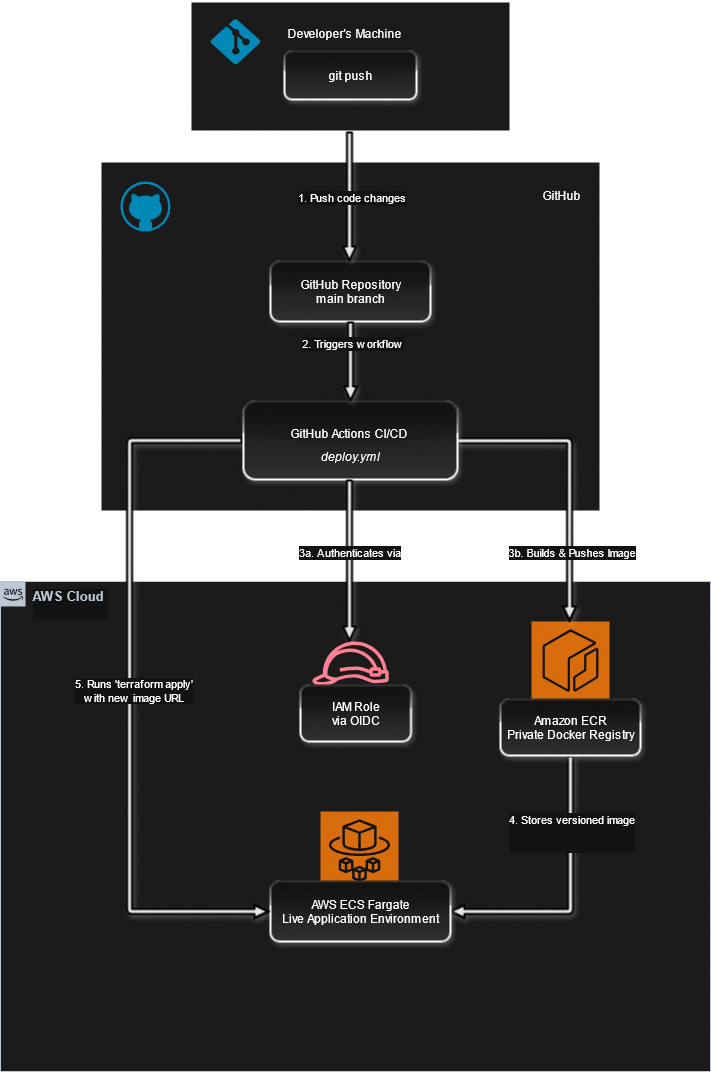
- GitHub receives temporary AWS credentials for each run. IAM trust configuration is more involved, but there is no long-lived secret to rotate or leak.
- Commit SHA image tags
- Each task definition points to an immutable, traceable build rather than an ambiguous
latesttag. - Fargate instead of managed EC2 hosts
- The deployment avoids patching container hosts. Per-task pricing can cost more than well-utilized EC2 capacity.
- Terraform receives the image URL
- Application versions and infrastructure changes share one plan, while the infrastructure remains independent of a hardcoded build.
what broke
The deployment needs an explicit image handoff
Building and pushing an image does not update a running ECS service by itself. The workflow must pass the commit-tagged ECR URL into Terraform so a new task-definition revision is created and ECS can perform the rolling replacement.
pipeline
From push to healthy task
- 1public entry point
- 0stored AWS access keys
- 3pipeline stages: build, plan, apply
- SHAidentifies every deployed image